1866 — 1944

Wassily
Kandinsky

The painter who proved that color and geometry could speak without words — and that abstraction is not the absence of meaning, but its purest form.

The Pioneer

Born in Moscow in 1866, Wassily Kandinsky abandoned a promising legal career at 30 to pursue painting in Munich. He went on to become one of the most influential artists of the 20th century — widely credited as the creator of the first purely abstract works in Western art history.

Kandinsky experienced synesthesia: he saw colors when he heard music and heard sounds when he painted. This neurological gift became his artistic philosophy — that visual art, like music, could evoke emotion purely through form, color, and composition, independent of any reference to the physical world.
The Bauhaus Years

From 1922 to 1933, Kandinsky taught at the Bauhaus — the legendary German school that fused fine art, craft, and industrial design. There he developed his most systematic theories: the triangle, circle, and square each corresponded to a primary color (yellow, blue, red); every form carried an emotional temperature.

His Bauhaus works — precise geometric compositions layered with organic tension — are the direct visual ancestors of this collection. When a Kandinsky portrait is generated from your wallet, it follows the same logic: form derived from data, color from behavior, composition from identity.

The Legacy

Kandinsky published Concerning the Spiritual in Art in 1911 — a manifesto arguing that art must transcend mere representation and reach for inner necessity. The work influenced every major abstract movement that followed: Abstract Expressionism, Minimalism, Color Field painting.

He died in Neuilly-sur-Seine in 1944, leaving behind over 700 paintings and a theory of visual language that remains as radical today as it was a century ago. His core conviction — that your inner world has a unique visual signature — is exactly what drives this project.

Works

Selected paintings from the Bauhaus and Munich periods.

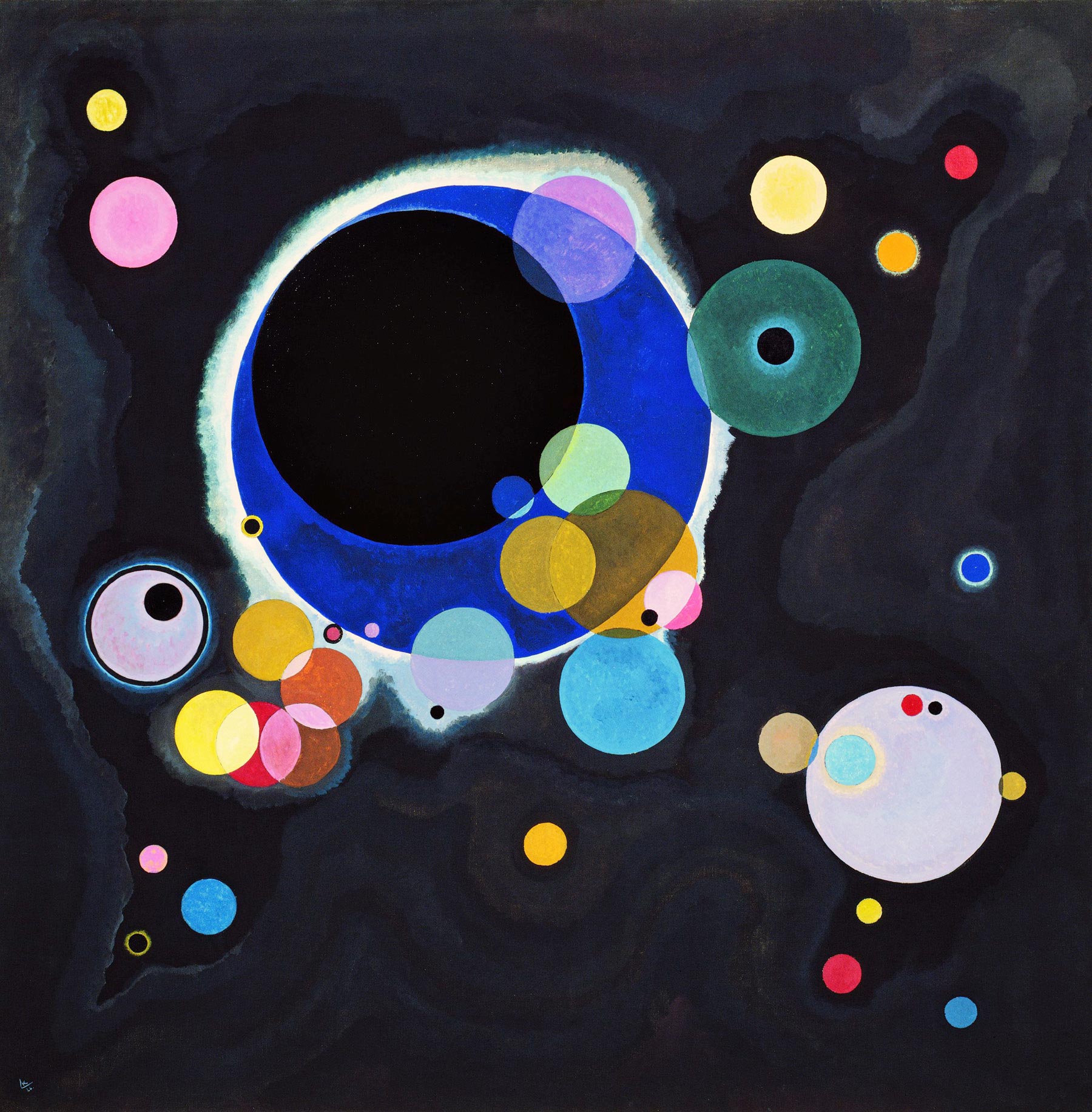
Several Circles
Several Circles1926 · Oil on canvas
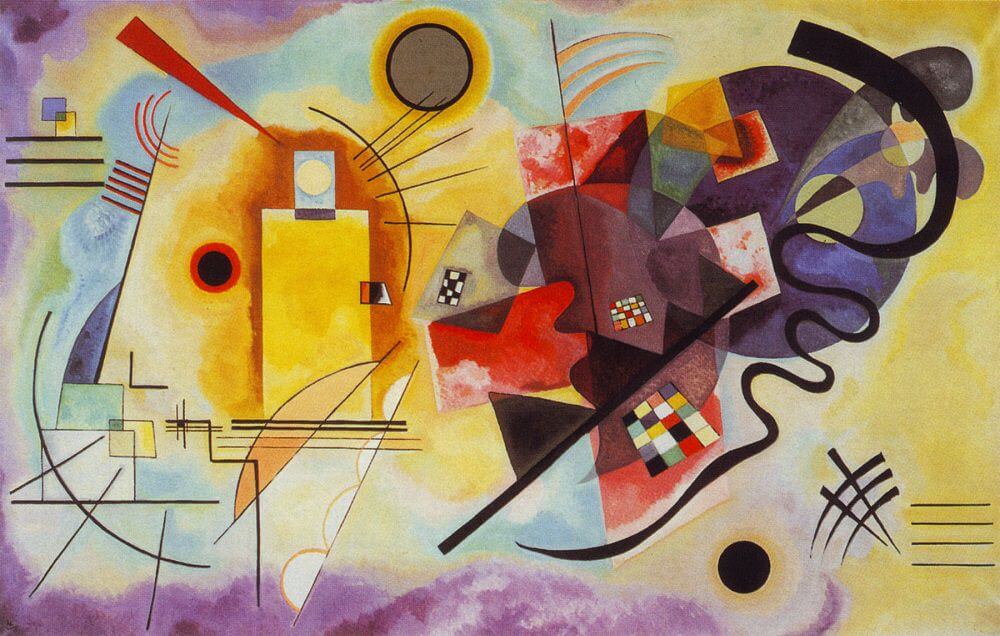
Yellow-Red-Blue
Yellow-Red-Blue1925 · Oil on canvas
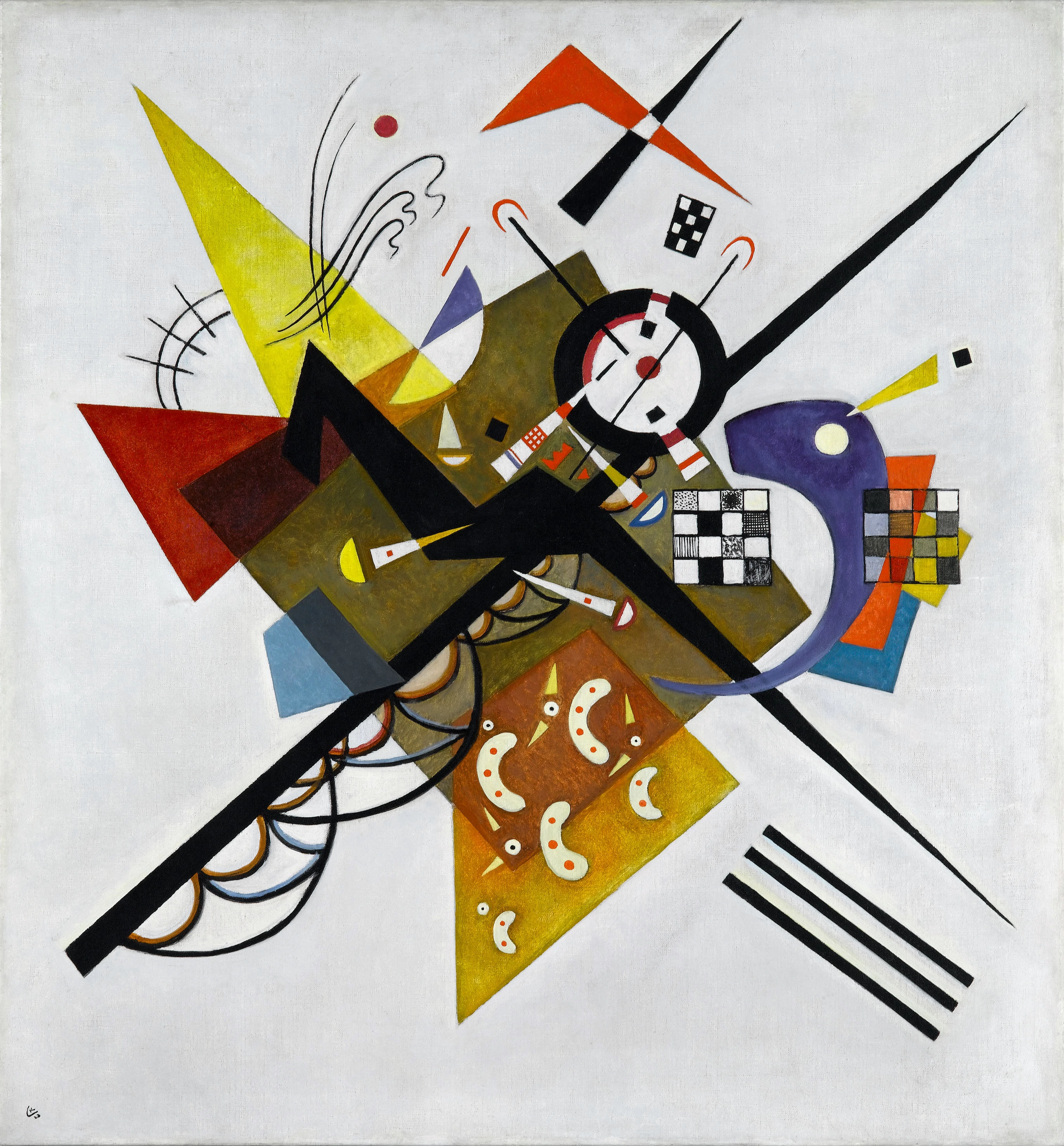
On White II
On White II1923 · Oil on canvas
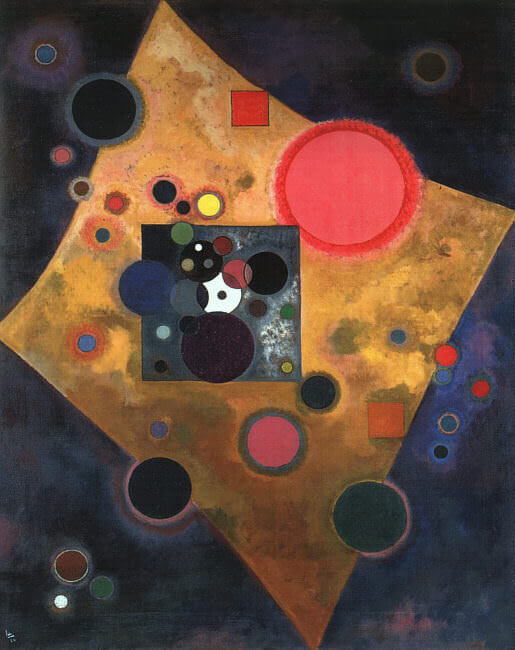
Accent in Pink
Accent in Pink1926 · Oil on canvas
"Color is a power which directly influences the soul. Color is the keyboard, the eyes are the hammers, the soul is the piano with many strings."
— Wassily Kandinsky, Concerning the Spiritual in Art, 1911

Why Kandinsky?

Every wallet has a history — transactions, positions, behaviors, patterns accumulated over time. Kandinsky believed that every inner experience has a unique visual form. We build the bridge: your on-chain identity, scored across seven dimensions, becomes the formal parameters of a Bauhaus composition — and an AI renders it as a portrait in Kandinsky's spirit.

No two wallets are the same. No two portraits are the same. Your art.

Mint your portrait →